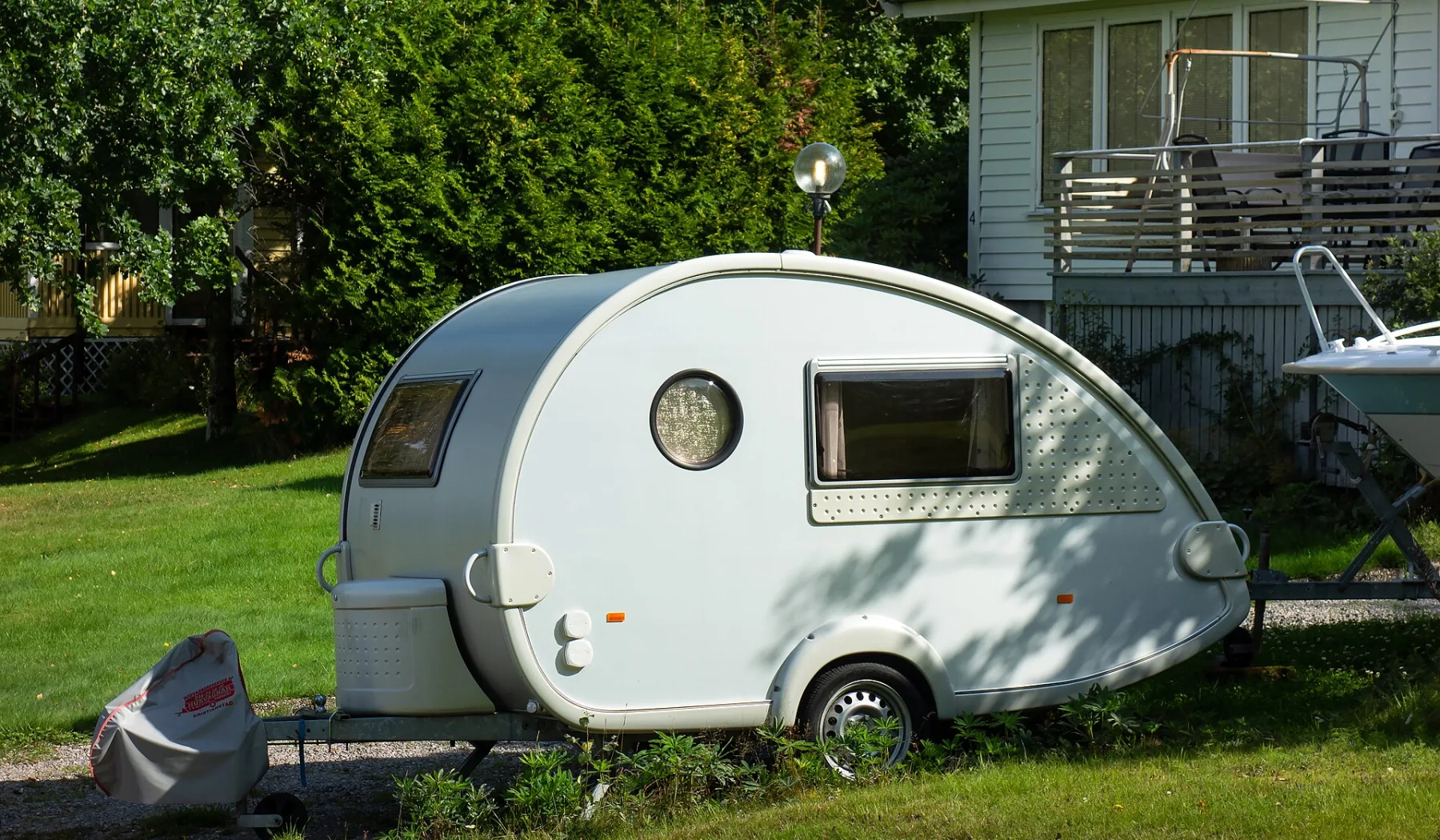
Micro caravan or teardrop?
A teardrop is a familiar type of compact trailer with a primarily sleeping-focused cabin. Other micro caravans use taller or squarer bodies to create a seat and sometimes a cooking area. Compare the usable interior rather than relying on labels.
Sleep space and airflow
Measure the mattress, try entering and leaving the cabin and inspect window ventilation. A tiny sleeping space can become damp if air movement is poor. Think about shoes and wet equipment too.
Towing weight and licences
Look up the trailer's plated mass, the car's towing limit and relevant driver entitlement. Accessories, batteries and water all add weight. A micro caravan is not automatically suitable for every car.
Cooking in bad weather
Some layouts have a galley beneath a rear hatch. Others require a separate cooker or campsite kitchen. An awning can help, but takes space, setup time and payload.
Second-hand condition
Inspect roof and hatch seals, floor, tyres, coupling and electrical lighting. A small trailer can suffer water damage just as a large one can. Check whether modifications have been installed safely.
Small versus conventional touring
Micro caravans suit frequent moves and travellers who spend most time outdoors. For longer trips in colder seasons, an ordinary caravan with indoor seating may be much more practical.
Micro caravans include several designs
A micro caravan might be a sleeping pod with a rear galley, a teardrop trailer or a short caravan with a small table inside. There is no single layout shared by every model. Compare usable headroom, bed dimensions and storage rather than judging only the overall length. A low design can be easy to store but may require you to change clothes or cook outside. Think about how the cabin will function on a wet evening.
Try the sleeping arrangements yourself
Measure the mattress and check the ease of getting in and out, particularly if two people will share the cabin. A very small interior can fill quickly with luggage. Decide where shoes, wet jackets and bedding will go. Ventilation is important because condensation can form in compact sleeping spaces. Test windows, vents and insect screens where fitted. A comfortable bed and reliable airflow matter more than a striking exterior shape.
Outdoor cooking has weather limitations
Many teardrops have a kitchen beneath the rear hatch. It can be pleasant in good weather, but wind and rain may complicate meal preparation. Ask which appliances, water containers and electrical components are included. Some models offer no kitchen at all. An awning may provide shelter, but adds setup time and payload. For touring through colder seasons, an indoor kitchen or access to campsite cooking facilities may be worth considering.
A small trailer still has weight limits
Do not assume a micro caravan can be towed by any car. Check the plated maximum mass, the car's towing allowance, noseweight and driver entitlement. Batteries, water, bikes and luggage increase the real weight. Extra equipment in a rear hatch can affect load distribution. Correct coupling, working lights and suitable tyres remain essential regardless of the trailer's size. Official vehicle data is more reliable than a casual description of the unit as lightweight.
Imagine spending a whole day inside
A basic sleeping pod may be ideal for short summer trips when you spend most of your time outdoors. But if rain continues for hours, there may be nowhere to sit or cook without leaving the cabin. Consider the campsites you use and whether shared kitchens or covered areas are available. A slightly taller micro caravan may offer a table and more storage. Choose the balance between compactness and comfort that suits your real holidays.
Inspect seals and damp on used examples
Small trailers can suffer water damage through roof joints, doors, rear hatches and floor edges. Look for stains, soft areas and musty smells. Check the hinges and latches on a galley hatch. Inspect tyres, coupling, lights and brakes where fitted. Ask whether accessories have been installed professionally. A clean sleeping area does not prove that hidden joints are dry. A condition inspection can be useful when the vehicle's history is unclear.
Storage needs more than a rough estimate
Micro caravans often fit in smaller storage spaces, but the drawbar, height and rear accessories must be measured. Check the garage opening as well as the total area inside. The location should allow the cabin to stay dry and adequately ventilated. Before each season, examine tyres and electrical connections even if the trailer has travelled very few miles. Small size makes storage easier, not maintenance unnecessary.
Comparing a teardrop with a compact tourer
A teardrop often prioritises sleeping and outdoor living, while a taller small caravan may provide a dining space and cooking facilities. Both can work well for different travellers. Compare bed comfort, towing weight, storage and the amount of time spent indoors. A short trailer may be ideal for frequent weekend stops. For longer holidays in variable weather, a conventional compact caravan might be more useful.
Remember the cost of missing accessories
A low advertised price may exclude batteries, an awning, kitchen equipment or other items you will need. Add those expenses to the purchase budget and account for their weight. Check whether the trailer has adequate capacity for the extra gear. Sometimes a more complete model represents better value than a basic shell requiring several additions. A sensible comparison includes the entire holiday setup, not simply the trailer price.
Make a practical shortlist
Write down bed length, ventilation, maximum mass, cooking facilities and storage space for each option. Check whether your car can legally tow it and whether the trailer will fit at home. On used examples, compare service history and signs of moisture. Try at least two layouts rather than choosing from pictures alone. The best micro caravan is the one that makes short trips easier without removing essential comfort.