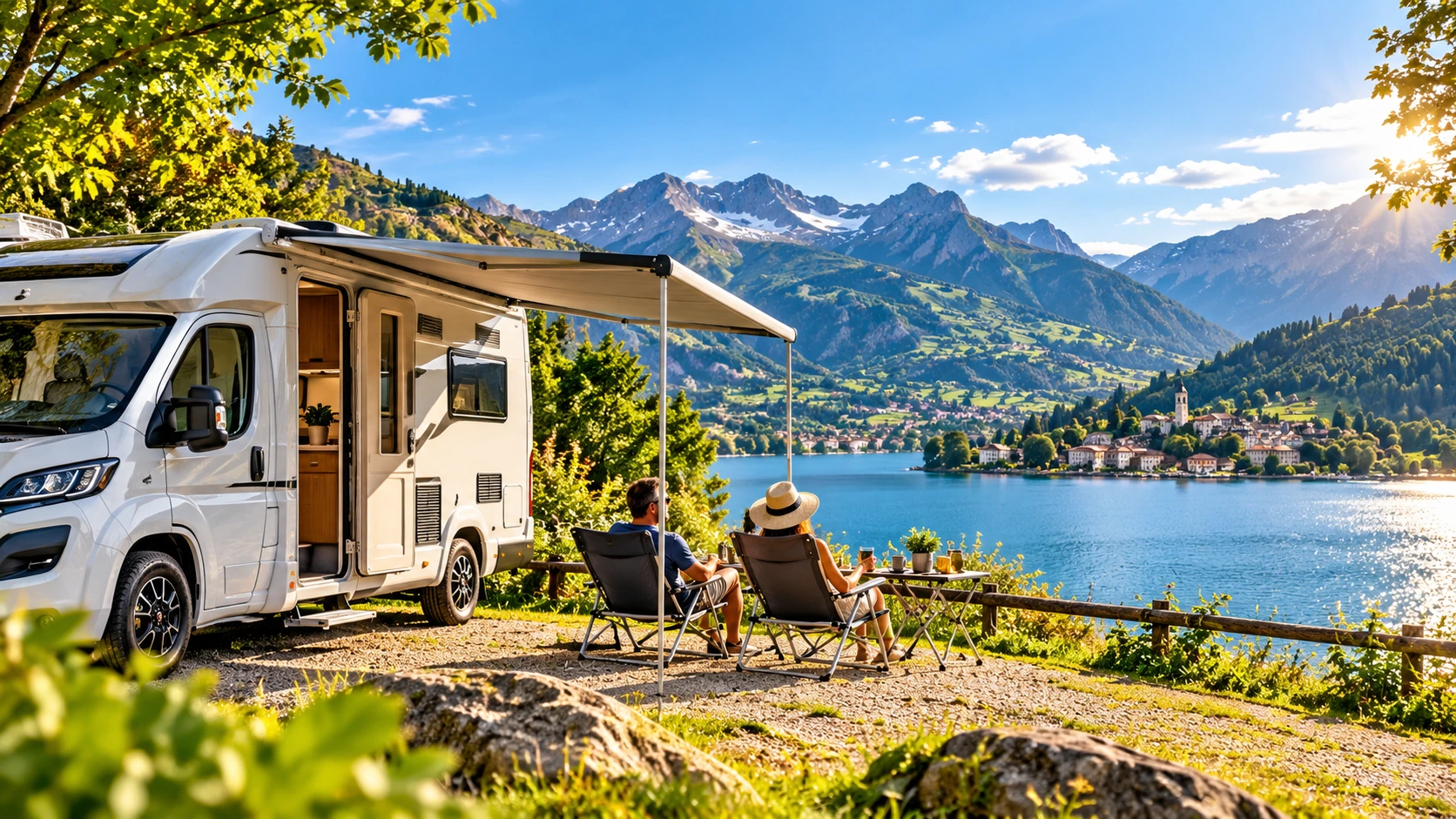
Campervan and panel-van conversion
A panel-van conversion keeps much of the original van body. This can make it easier to negotiate narrow lanes and smaller parking areas, although dimensions vary. Check whether the bathroom is practical, whether the bed is long enough and how much usable storage remains after the water and gas equipment has been installed.
Read the guide ›
Low-profile or coachbuilt motorhome
A low-profile motorhome keeps the original cab but adds a purpose-built living body. Many designs offer a more generous lounge than a compact van. Try moving around with the dining table in place and any drop-down bed lowered. A larger body also means checking width, height, turning space and how the vehicle feels in crosswinds.
Read the guide ›
A-class motorhome
An A-class has a cab integrated into the design of the living accommodation. The view and sense of space can be excellent, but specialist windscreens and body panels may cost more to repair. Inspect seals and check the availability of replacement parts, particularly when looking at a model that is no longer produced.
Read the guide ›
Overcab motorhome for families
An overcab model has a sleeping area above the driving cab. It can leave the dinette free for meals while others use fixed beds. The extra height may limit access to car parks, bridges and certain pitches. Count the approved seat belts, not just the advertised berths, if children or additional passengers will be travelling.
Read the guide ›
Pop-top camper
A pop-top roof creates standing headroom or another sleeping area when parked. Look at the roof fabric, hinges, seals and closing mechanism. A fabric-sided sleeping area can be colder or noisier than a fixed roof. Measure the real vehicle height with roof racks and aerials fitted rather than relying on the brochure figure.
Read the guide ›
Four-wheel-drive and expedition motorhomes
A 4x4 system can give better traction on slippery surfaces and permitted rough tracks. It does not guarantee safe travel across deep mud or rocky ground. Tyres, ground clearance, overhangs and the weight of the habitation body remain critical. An expedition build adds separate questions about power, water, reliability and repairability.
Read the guide ›
Luxury liners and large vehicles
A liner may have a spacious lounge, generous storage and extensive equipment. That space comes with additional weight, parking constraints and running costs. Before buying a large motorhome, check the relevant driving licence rules and think about ferry bookings, storage height and the pitches you normally use.
Inspecting a used motorhome
Ask for service history, habitation checks and records of any repairs. Inspect tyre dates, brakes, heating and electrical systems. Damp can be hidden behind otherwise tidy furnishings. Test the layout in ordinary use, including bed access and cooking, before arranging an inspection by someone familiar with the vehicle.
Family travel and the layout test
A useful motorhome needs to work on rainy afternoons as well as sunny campsites. If children travel with you, check the approved seatbelts, access to beds and places to store damp clothing. With a dog, think about ventilation during stops and where equipment will go. A permanent bed saves daily rearrangement but may reduce flexible seating. Try the interior with everyone inside before deciding.
Looking beyond the asking price
Allow for servicing, tyres, habitation checks, insurance, storage and repairs after purchase. A specialist windscreen or unusual body panel can cost more to replace than a conventional van component. Ask whether parts are still available. If a vehicle is located abroad, establish its paperwork, history and registration requirements before committing to a viewing.