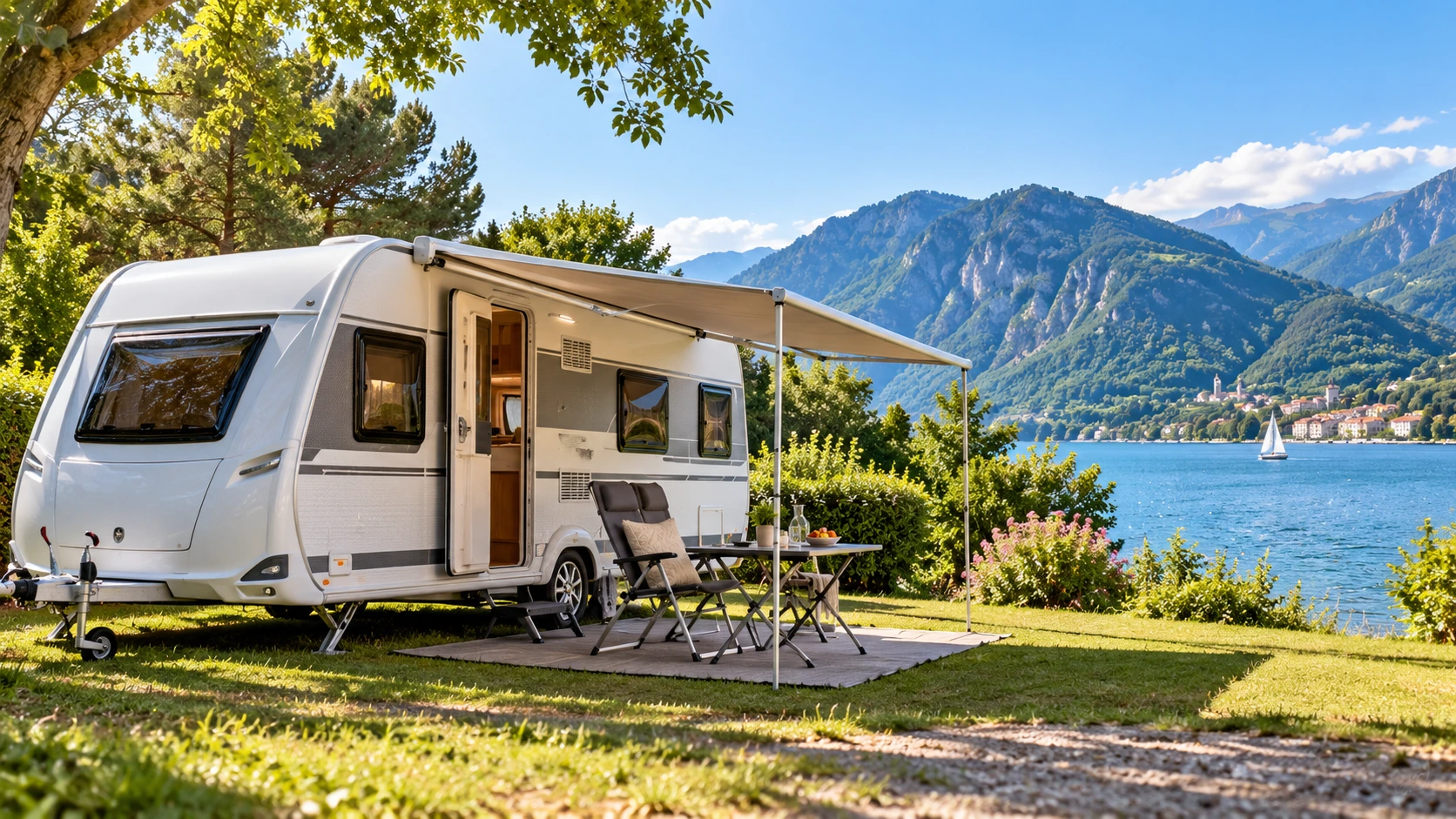
Conventional touring caravan
A conventional tourer has a permanent body containing a lounge or dinette, sleeping arrangements and usually a kitchen. Layouts vary from compact two-berth models to large family vans. Walk through the interior with beds made up. Check whether the washroom, lockers and fridge are still usable and whether there is room for everyone to sit.
Pop-top and rising-roof caravan
A rising-roof design has a lower profile when travelling, then gains headroom on site. Inspect the fabric bellows, joints, roof seals and lifting mechanism. The lower height can help with some storage arrangements, but the model's actual dimensions and weight still need to be checked against your vehicle and garage.
Read the guide ›
Teardrop caravan
A teardrop often provides a small sleeping cabin and sometimes a kitchen accessed from a rear hatch. It encourages outdoor living and can be simple to set up. In cold or wet conditions, however, cooking outside may be inconvenient. Check ventilation, mattress size, hatch seals and where clothes or wet shoes will be kept.
Read the guide ›
Small and lightweight caravans
The word lightweight covers many different designs and does not replace the figures on the plate. Check maximum permitted weight and payload, not only an unladen figure. Gas bottles, water containers, awnings and bicycles make a difference. A shorter caravan can also offer less usable storage than it first appears.
Family caravans and bunk beds
Fixed bunks can preserve daytime seating and reduce the need to change beds each evening. Families should check safe access to upper bunks and whether everyone can sit inside in poor weather. Think about storage for clothing, toys and outdoor equipment rather than judging suitability by the number of sleeping places alone.
Twin-axle caravans
Larger tourers sometimes use a twin-axle arrangement. They may be more substantial to tow and can be awkward to manoeuvre by hand. Compare the permitted weights, available storage space and how your tow car handles the combination. A motor mover, if fitted, should be tested before purchase.
Buying a used caravan in the UK
Ask about damp checks, tyre age, brakes, hitch and servicing. Look at seals around windows, rooflights and locker doors. Allow for the cost of secure storage and any insurance requirements. Take independent advice if the towing combination or condition of the caravan is uncertain.
Make the towing combination work
A caravan must suit the actual tow car rather than merely looking small enough. Compare authorised masses, noseweight, payload and the driver's licence entitlement. Remember that bicycles, gas bottles, awnings and luggage all add weight. A manoeuvring aid may be helpful but needs its own checks. Where possible, assess the combination slowly and safely before a long holiday.
Different layouts for different holidays
A couple taking frequent weekend breaks may value easy packing and a simple bed above a full washroom. Families staying for several weeks might need fixed bunks and enough indoor seating for poor weather. An awning adds shelter but also weight and time at every stop. Think about secure storage during the months when the caravan is not in use.