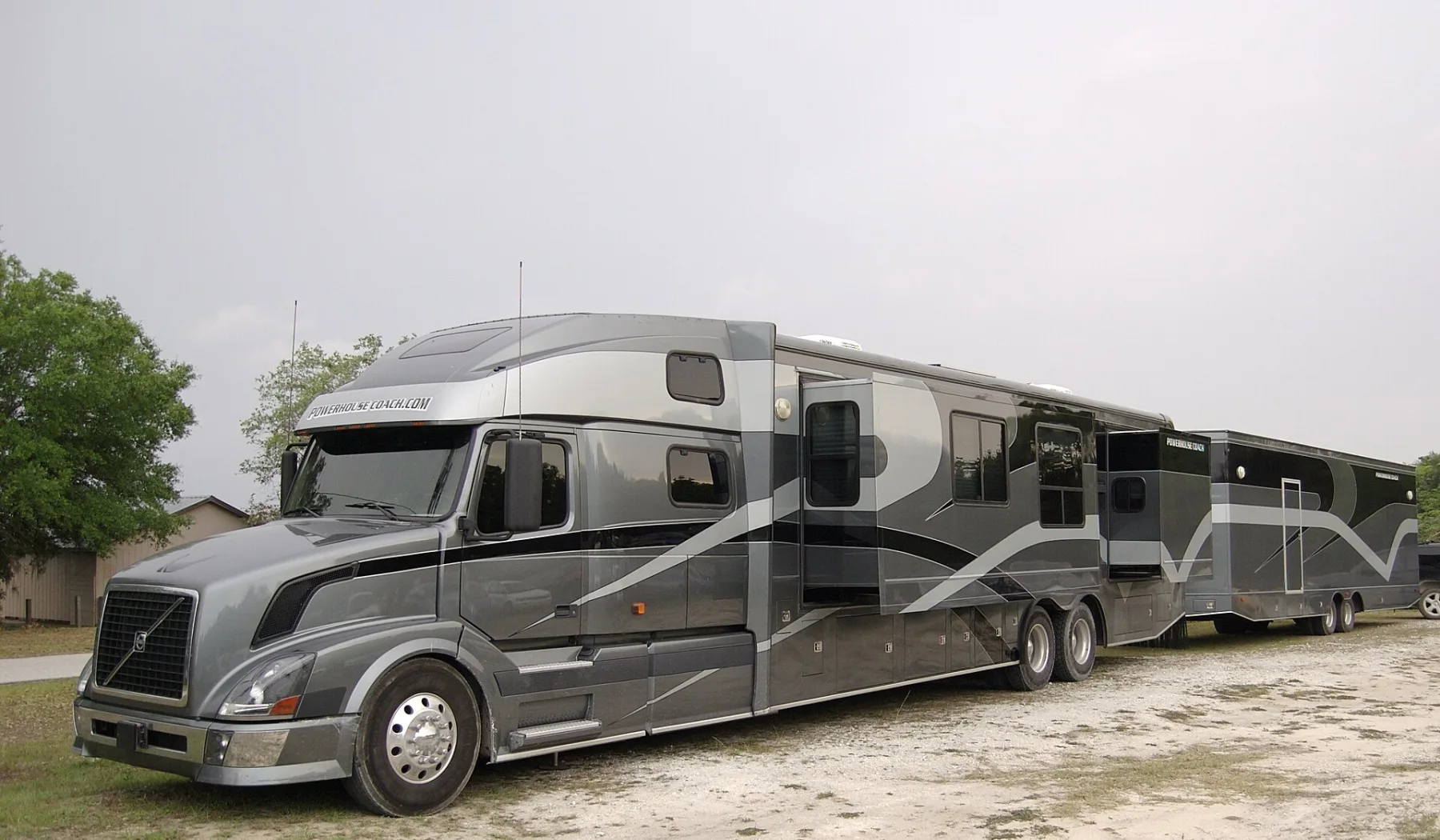
Liner versus A-class motorhome
Many liners are built as large A-class or integrated motorhomes, but the two expressions do not mean the same thing. Check headroom, construction, insulation and the amount of usable floor space. A very wide lounge is attractive when parked but less helpful when you are trying to find somewhere to stop in a town.
Weight and driving entitlement
Large motorhomes may exceed the limits of some driving licence categories. Check the plated maximum authorised mass and the relevant rules before purchasing. Allow for the weight of passengers, water, bicycles and luggage. A vehicle with an impressive specification may have surprisingly little payload left for ordinary holiday equipment.
Parking and route planning
Record the overall height, width and length, including mirrors, carriers and roof equipment. Long rear overhangs can be vulnerable on steep entrances. Think about ferry fares, low bridges, tight campsite roads and winter storage. Arrange a sensible test drive that includes straightforward manoeuvring rather than relying entirely on the seller's photographs.
Systems and servicing
A luxury motorhome may contain complex heating, batteries, powered beds and additional suspension systems. Each component should work correctly and have maintenance records. Specialist windscreens or body panels may be expensive to source. Check whether local workshops are willing to maintain the base vehicle and the habitation equipment.
Buying a used liner
Inspect roof joints, windows, floor, underbody and any signs of historic water ingress. Check tyres, brakes and engine servicing. Have the seller demonstrate each habitation system, not just the lighting. Independent inspection is sensible for a vehicle with a high purchase price or an incomplete service history.
Who genuinely benefits?
Extended touring and long stays are where a spacious liner may shine. If you mainly take weekend breaks or visit small villages, a shorter coachbuilt motorhome could be easier to live with. Build a budget for maintenance, storage, insurance and road use before choosing.
Why the liner label needs careful interpretation
A liner motorhome usually sits at the spacious, high-comfort end of the market, but there is no single official specification for the term. Models differ in chassis, length, insulation and living facilities. Compare the layout of the actual vehicle rather than assuming every liner offers the same standard. Try the lounge, kitchen and washroom with people moving around. A beautifully furnished interior is less useful if cupboard doors obstruct the walkway or the beds are awkward to access.
The permitted weight matters more than the storage volume
Large garages can suggest that you may carry as much equipment as you wish. In reality, passengers, water, bicycles and luggage all count towards the vehicle's allowable mass. Check the plated maximum authorised weight and the remaining payload of the specific motorhome. Its weight may also affect the driving licence required. If an advert gives only an unladen figure, ask what is included. A weighing of the vehicle ready for travel may be worthwhile before committing.
Route planning with a large motorhome
Before buying a long liner, look at the roads and campsites you use most often. Narrow village streets, steep entrances, height restrictions and short pitches may limit your choices. Measure the complete vehicle with mirrors, roof accessories and rear carriers. Ferry crossings and some parking areas may have vehicle-size conditions or different charges. A liner is most enjoyable when the travel plan gives it enough room, rather than forcing constant changes of route.
How does the kitchen work for two people?
The kitchen is often a selling point, with a sizeable fridge, plenty of cupboards and additional work surfaces. But test whether one person can prepare a meal while another uses the seating area. Check that drawers lock properly for travel and that the sink, hob and electrical functions operate as intended. The quality of the everyday layout matters during extended trips. More built-in devices do not always mean easier living.
Heating, power and servicing
A high-specification motorhome may have a sophisticated heating system, large batteries, powered beds or specialist suspension components. Each adds to the maintenance requirements. Ask for manuals, receipts and a demonstration of every major system. Find out where replacement parts can be sourced and whether nearby workshops service the base chassis and habitation equipment. An unusual windscreen or body panel can be costly to replace. These factors belong in the ownership budget.
Used liners deserve a full condition inspection
Examine roof joints, window seals, flooring and the accessible underside for deterioration and damp. Review tyre age, brake condition and mechanical service history. Test the water system, heating and all major electrical equipment with the seller. Smart upholstery does not prove that the structure is dry. Where maintenance records are incomplete or the vehicle represents a major purchase, an independent inspection can reduce uncertainty about expensive hidden problems.
Take the driving experience seriously
A large motorhome feels different from a van when turning, braking and dealing with side winds. Arrange a calm test drive on ordinary roads and assess visibility, mirror placement and the driving position. Avoid risky manoeuvres to discover the limits of the vehicle. Check how many passenger seats have approved restraints; the number of berths is not necessarily the same. Comfort behind the wheel matters as much as the living room when covering long distances.
Storage and winter use need planning
A large liner may not fit a standard driveway, garage or storage unit. Measure access gates and turning space before purchasing. If you plan to travel in cold conditions, ask whether tanks, pipes and heating distribution are designed for the expected temperatures. A warm seating area does not guarantee frost protection for wastewater. When the vehicle is stored, follow the manufacturer's guidance for the water system, battery maintenance and ventilation.
Would a smaller motorhome fit your habits better?
The space of a liner may be rewarding for long stays and travellers who spend considerable time inside. For frequent city visits or quick weekend trips, a shorter A-class or coachbuilt motorhome could be more convenient. List your usual destinations, sleeping needs and available storage before deciding. Comparing two different sizes on the same imagined route often makes the trade-offs clear. Buy for the journeys you will actually take.
Plan for the cost of ownership
The purchase price is only the beginning. Insurance, servicing, tyres, storage, fuel and some ferry costs can be greater for a heavy motorhome. Specialist body parts and complex equipment may increase the repair budget. Ask what work is due and check whether parts are available locally. A cheaper example is not automatically better value if it has missing records or neglected systems. Compare the condition and long-term cost, not just the appearance.