

Selling a used caravan privately in the UK: photos and price
When selling a used caravan privately, a detailed advert can do more to attract suitable buyers than enthusiastic sales language. People need to know the age, model, towing details, condition and included equipment..
When selling a used caravan privately, a detailed advert can do more to attract suitable buyers than enthusiastic sales language. People need to know the age, model, towing details, condition and included equipment. Preparing the information in advance also makes viewings easier and helps both parties agree what is being sold.
Build an advert with verifiable facts
State make, model, age, dimensions, relevant weights and berth arrangement. Describe any modifications, accessories and known faults. Avoid ambiguous claims about condition or remaining warranty. Where reports or service documents exist, explain what they cover rather than simply describing the caravan as fully checked.
Use photographs that answer questions
Show the exterior from several sides, the coupling area, kitchen, washroom, beds, storage and any visible wear. Buyers particularly benefit from clear photographs around windows and roof openings. Use current images taken in good light. An attractive old holiday photo should not replace pictures of the caravan's present state.
Set a realistic asking price
Compare caravans of similar age, specification, condition and layout. Online asking prices are not guaranteed sale values. Account for worn tyres, missing accessories, servicing and known repairs. Keep relevant invoices ready, as they can help a buyer understand the vehicle's care.
Prepare the viewing and agreement
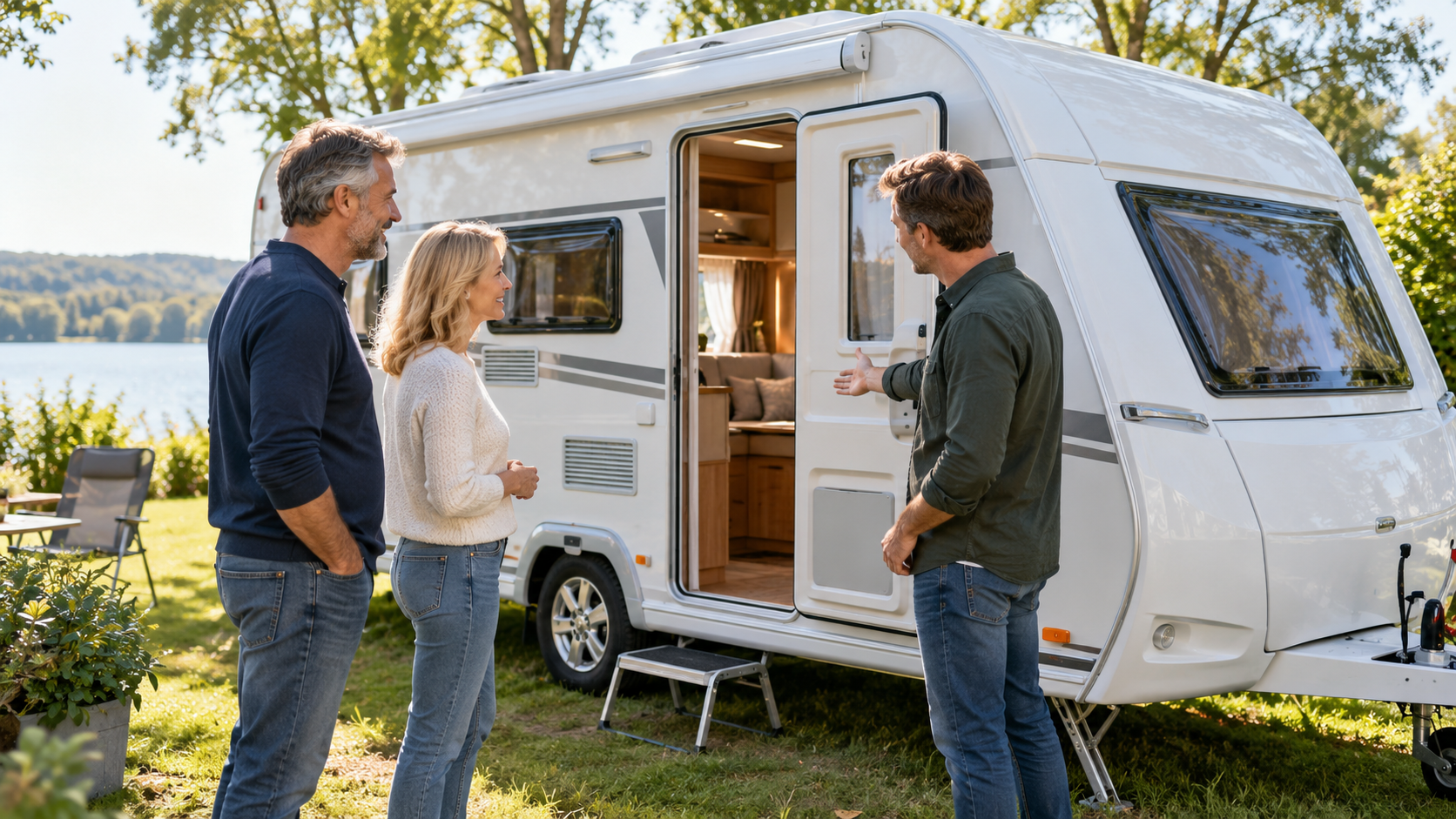
Allow enough time for inspection and arrange any towing or test use in compliance with licence and insurance rules. Verify the buyer's identity and agree the method of payment and collection clearly. Document known faults and the equipment included in the transaction. Caution is sensible if someone presses for an immediate payment arrangement that you do not understand.
Remove outdated adverts promptly
Keep the details consistent if you advertise in several places. After selling, remove or update listings to prevent further enquiries. You can review Campspot selling options as another channel, subject to current UK eligibility and platform conditions.
Provide the facts a buyer needs for towing
People interested in a caravan often need the relevant weight and dimension information before they can even arrange a viewing. State the model variant and the figures shown in the vehicle's documentation, and explain any heavy equipment installed later. This reduces enquiries from owners of unsuitable tow vehicles. Provide details of service and repair work in a form buyers can understand rather than making broad claims that everything has recently been checked.
Complete the handover professionally
Gather the keys, manuals, service records and any accessories included in the sale. Prepare written information about known defects and the agreed condition. Discuss collection and payment beforehand. If a towing journey is involved, the buyer must have a suitable vehicle, licence and insurance. Close other adverts once the caravan has been sold so that its status remains accurate across websites.
A practical checklist
- Weights and dimensions correctly stated
- Photographs show the current condition
- Known defects explained
- Documents and accessories ready at collection
Explore related guides
You may also find it useful to read Selling a motorhome privately in the UK: adverts and V5C and Buying a used touring caravan in the UK: towing weights and damp. Both articles explore different practical questions.
Frequently asked questions
Should I mention defects in the advert?
Yes. Buyers benefit from an honest description of the caravan's condition.
Are asking prices the same as sale prices?
Not necessarily; use comparable listings only as part of your valuation.
What should be recorded at collection?
The agreed price, included items, known defects and handover condition.
Read further guidance in the Campspot knowledge hub and verify current conditions with the relevant provider.