

Buying a used touring caravan in the UK: towing weights and damp
A used touring caravan can be good value when its condition is understood and the towing combination is legal. Before falling for an attractive layout, ask whether the tow car, caravan weights and driver's licence are.
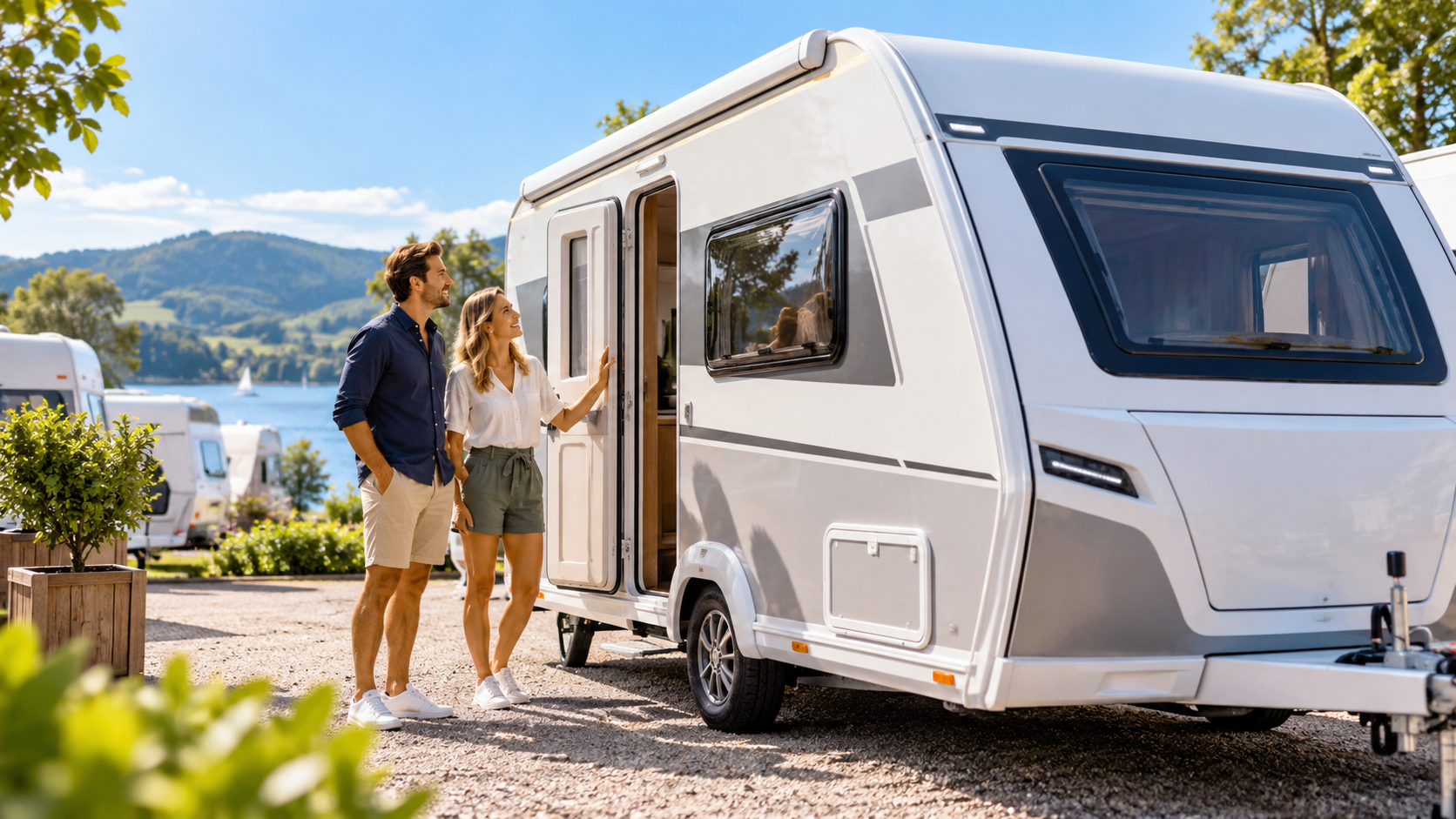
A used touring caravan can be good value when its condition is understood and the towing combination is legal. Before falling for an attractive layout, ask whether the tow car, caravan weights and driver's licence are compatible. Damp, tyres and service history then deserve the same attention as the asking price.
Start with legal towing limits
Review the car and caravan paperwork, including permissible masses and towing limits. The vehicle's ability to pull a caravan is not determined by engine power alone. Equipment and holiday luggage increase the actual mass. Check the licence entitlement for the intended driver and do not rely on unverified claims in an advert.
Assess the layout and space
A fixed double bed may be convenient for a couple, while families may want separate sleeping areas. Test whether the lounge remains usable when beds are made. Check storage, headroom, the kitchen and washroom. A caravan that feels spacious in photographs can be cramped when everyone and their luggage are inside.
Look for damp and structural problems
Inspect around windows, rooflights, doors, corners and the floor. Ask for damp-check reports and evidence of past repairs. A musty smell, stained interior or soft area needs further investigation. Consider a professional inspection before committing to an expensive purchase. Damaged structure may not be obvious during a quick viewing.
Check running gear and equipment
Inspect tyre age and condition, lights, coupling and visible brake components. If the history is incomplete, ask a qualified workshop for an assessment. Test fridge, heating, water pump and interior electrics under the seller's instructions. Find out exactly which accessories are included and whether they work.
Compare terms and paperwork
A private sale may involve different rights from a purchase through a trader. Check the seller's identity and keep written details of condition, equipment and agreed collection. Compare several broadly similar caravans rather than relying on one advertised price. Campspot caravan listings offer another way to discover options while checking location and availability.
Look beyond the caravan's unladen figure
Once a touring caravan is loaded with clothing, food and holiday equipment, the weight may be very different from an empty example shown in an advert. Ask whether accessories have been installed since the manufacturer supplied it and how they affect its mass. Check the towing car's documented limits and the licence rules for the intended driver. A caravan that suits your holiday style is not a good choice if the towing combination cannot be used lawfully.
Inspect caravans that have stood outdoors
A caravan stored outside for several years may need attention around seals, tyres and exposed fittings. Examine the interior near windows, rooflights and floor edges. Fresh paint or upholstery is not evidence that hidden problems have been resolved. Request any damp readings, servicing evidence and records of repair. If a seller cannot explain work that appears recent, seek further inspection before committing to the purchase.
A practical checklist
- Tow vehicle and legal weights compatible
- Layout tested in person
- Damp and running gear assessed
- Equipment and defects documented
Explore related guides
You may also find it useful to read Buying a used motorhome in the UK: V5C, damp and payload and Touring caravan maintenance after a coastal holiday. Both articles explore different practical questions.
Frequently asked questions
Can any car tow a touring caravan?
No. The vehicle, trailer and driver's entitlement must meet the relevant rules.
Is damp always visible?
Not necessarily; independent damp testing may reveal concerns.
Should I compare only caravans of the same year?
Year is useful, but layout, condition, maintenance and weight are also important.
Read further guidance in the Campspot knowledge hub and verify current conditions with the relevant provider.