
This USA-focused guide uses American RV terminology and helps you ask better questions before buying, storing or travelling.
Match the storage type to your RV
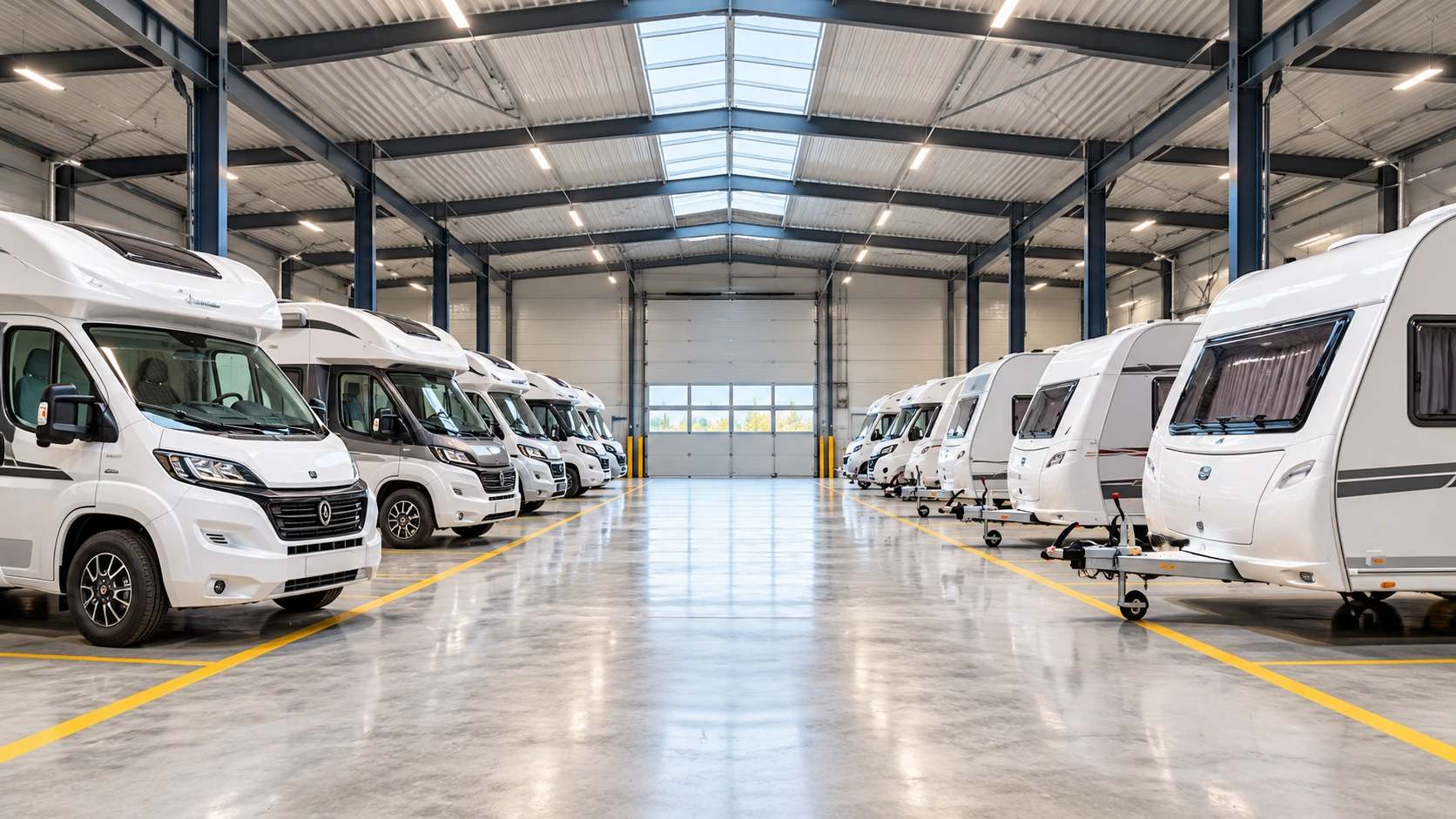
Commercial RV storage generally ranges from open outdoor parking to roofed bays and fully enclosed indoor buildings. An outdoor lot may cost less and offer straightforward access; covered storage provides some protection from sun and precipitation; indoor storage can reduce weather exposure but may have tighter size or access limits.
Check the actual height of your RV with roof equipment, not just its published body height. Ask the operator for clearance dimensions, turning space, surface conditions, restrictions on trailers and whether large motorhomes can be manoeuvred safely into the proposed bay.
Compare access hours and operational rules
Some storage facilities offer extended or around-the-clock access; others require an appointment or have restricted opening hours. Choose based on how often you travel and whether early departures are important. Confirm gate access, site lighting and whether visitors may enter with you.
Read the agreement for rules on washing, maintenance, tire inflation, electrical hookups, live occupation, propane and work inside the storage area. A vehicle storage space is not necessarily a place where you may carry out repairs or stay overnight.
Ask specific questions about security
Fencing and a camera are useful features but not guarantees. Ask how access is controlled, whether lighting covers the proposed space, how incidents are handled and who can enter the property. Check the facility’s documentation and the limits of any security representations.
Insurance is a separate issue. Confirm whether your RV policy covers off-site storage and whether the facility agreement requires additional coverage. Ask what the storage operator is responsible for, and obtain written terms rather than relying on an informal promise.
Consider climate, moisture and sun exposure
Sun can damage seals and finishes; storms, heavy rain, frost and falling debris create different risks depending on location. Some regions have frequent severe weather, while others have prolonged heat. Match protection to the local climate and the vehicle's maintenance needs.
Inspect roof seams and window seals before storage, remove perishable items and follow manufacturer instructions for the water and electrical systems. Avoid blocking required ventilation, and use covers only if compatible with the vehicle and storage conditions.
Understand pricing and hidden extras
Compare the total cost over your expected storage period, not just an introductory monthly rate. Ask about deposits, notice periods, late fees, insurance requirements, administrative fees and minimum contract length. Check whether charging, wash facilities or occasional vehicle movement cost extra.
A location closer to home may save time and travel expenses even when the monthly rent is slightly higher. Measure your vehicle carefully to avoid booking a space that is too small.
Prepare a checklist before leaving your RV
Photograph the vehicle's condition, secure loose items, close windows and roof vents, check tire pressures as specified by the manufacturer and follow instructions for batteries and water systems. Remove valuables where practical and document the storage date.
Ask whether the operator allows periodic condition checks and how a problem will be reported. Plan inspections during long storage periods, particularly after severe weather. A facility contract does not replace routine vehicle maintenance.
How to choose between three offers
Build a comparison table covering distance from home, price, vehicle dimensions, access hours, surface type, security arrangements, insurance terms and cancellation conditions. Weight these factors by your actual usage rather than choosing the lowest price alone.
If you intend to sell the RV soon, easy viewing access may matter more than enclosed long-term storage. If you only travel in summer, winter protection and battery management could be your main concerns.
Storage versus parking at home
Home parking can be convenient but may be limited by driveway size, neighbourhood rules, property arrangements or local regulations. Before making changes to a property or relying on street parking, check the requirements that apply in your area.
If commercial storage is required, choose a facility that permits your exact RV type and provides clear written terms. For pre-purchase budgeting, use the companion USA used RV buying checklist.
Frequently asked questions
Is indoor RV storage always better than outdoor storage?
No. Indoor storage can provide more weather protection, but space, access, price and the facility's terms may be more important for your needs.
Can I leave an RV connected to shore power in storage?
Only when the facility permits it and your equipment supports the arrangement. Follow the operator's rules and manufacturer guidance.
Does an RV storage facility insure my RV?
Do not assume so. Read the facility agreement and confirm your own insurance coverage with your insurer.
How often should a stored RV be checked?
Use the manufacturer’s maintenance recommendations and adjust for climate, storage duration and facility conditions. Inspect after severe weather where appropriate.