
This Canada-focused guide considers provincial differences and the conditions RV owners encounter across Canadian seasons.
Decide where the RV will be stored
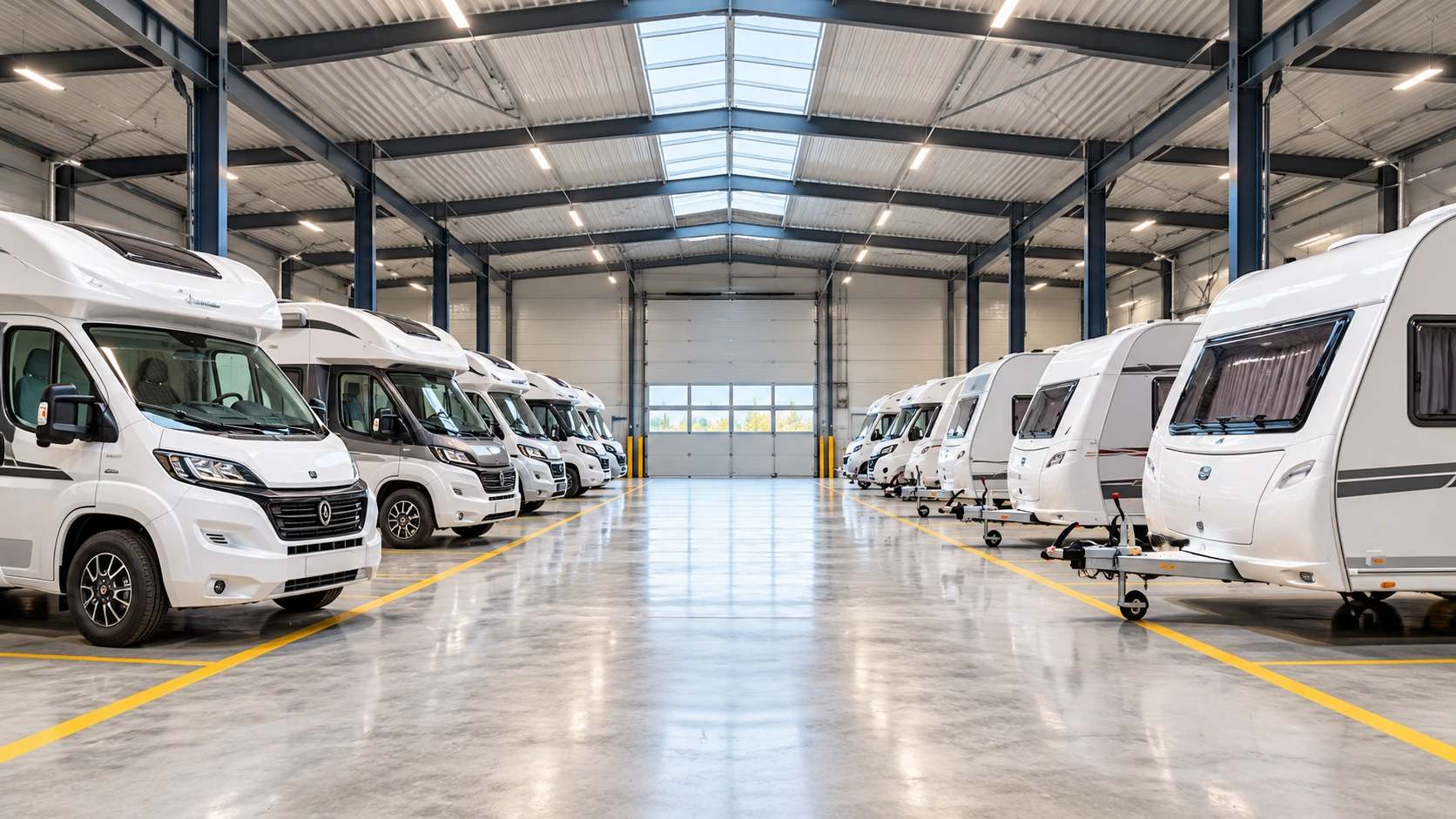
Winter storage can be outdoors on private property, in a commercial open lot, beneath a covered bay or inside an appropriate building. Each setting offers different weather protection, vehicle access and cost. Your ideal arrangement depends on the vehicle’s size, local climate and whether you will use it during winter.
Measure the actual height including air conditioning or other roof equipment. At a commercial facility, check the available space, entrance clearance, turning radius and whether the operator accepts your motorhome or trailer type.
Follow the manufacturer's winterization guidance
Water systems can be affected by freezing temperatures. Use the manufacturer’s instructions for the exact RV model and its plumbing configuration, and seek qualified service when you are unsure. Different fixtures, heaters and storage arrangements can require different preparation.
A generic checklist cannot replace model-specific instructions. Ask the previous owner or dealer for service records if you are new to the RV. Have technicians handle work that requires specialized tools or knowledge.
Manage moisture and ventilation carefully
Long storage periods can allow moisture to accumulate, particularly where water has already entered through a worn seal. Inspect the roof, windows, exterior joints and any signs of damp before storage. Remove food and damp textiles and keep the interior clean.
Ventilation recommendations vary by manufacturer and storage setting. Never leave openings that may admit snow, rain or pests, and avoid materials that trap moisture against the vehicle. Professional advice may be useful for a vehicle with a history of leaks.
Consider batteries and electrical equipment
Battery care depends on the battery chemistry, vehicle equipment and temperature range. Consult the manufacturer’s recommendations before disconnecting, charging or storing batteries, and follow the rules of the storage facility. Do not assume a storage bay allows continuous shore power.
Review the condition of installed detectors and electrical components during the preparation process. If wiring or charging equipment appears damaged or modified, use a qualified technician rather than improvising a repair.
Protect tires and monitor the exterior
Check tire condition and pressure in accordance with vehicle guidance. Prolonged periods parked can affect tires and suspension components. Follow the manufacturer's instructions for how the RV should be positioned and supported while stored.
Inspect roof seals, doors, exterior equipment and covers before winter. A cover must be appropriate for the vehicle and secured according to its instructions. Consider local snowfall, wind and drainage conditions at the storage location.
Review the storage facility's terms
Ask about access hours, security arrangements, insurance requirements, contracts, deposit rules and the handling of vehicle moves. Some facilities allow periodic inspections, while others restrict owner access during the off-season.
Compare the total seasonal cost rather than the advertised monthly price alone. Check whether spring pickup, battery maintenance or additional services involve separate fees.
Make periodic inspections part of the plan
Schedule checks based on vehicle condition, climate and storage duration. Look for water intrusion, weather-related damage, issues with coverings and any signs of pests. Record findings, especially after significant storms or unusually wet periods.
If you cannot visit, ask whether the operator offers an inspection service and what it includes. Clarify whether photographs or written reports are available. Do not assume every storage contract includes vehicle maintenance.
Plan spring recommissioning early
Before the first trip after winter, review the water system, electrical equipment, safety devices, tires, brakes and all roadworthy components using the owner's manual. Arrange professional inspection or service where required.
Allow enough time to address problems before a planned holiday. A rushed departure is not the best time to discover a leak, a battery problem or neglected mechanical maintenance.
Choose a storage option that suits your travel rhythm
A covered facility may be worthwhile for an RV parked through several months of severe weather; an outdoor lot can be practical when the vehicle is properly prepared and monitored. Distance from home and access rules can matter as much as weather protection.
If you are still considering a purchase, read the Canadian used RV buying guide to understand how storage history can affect a vehicle's condition and ownership costs.
Frequently asked questions
Does every RV require the same winterization steps?
No. Use the instructions for the specific manufacturer, model, water system and equipment. Ask a qualified RV technician when uncertain.
Is outdoor winter RV storage possible in Canada?
It can be, depending on the vehicle, climate, preparation and local rules. Evaluate the weather exposure and maintenance needs before deciding.
Should the battery stay connected during winter storage?
That depends on battery type, vehicle design, conditions and manufacturer instructions. Obtain model-specific guidance.
What should I inspect before the first spring trip?
Review the water system, tires, batteries, brakes, safety devices and any issues documented during storage; schedule professional checks where needed.