
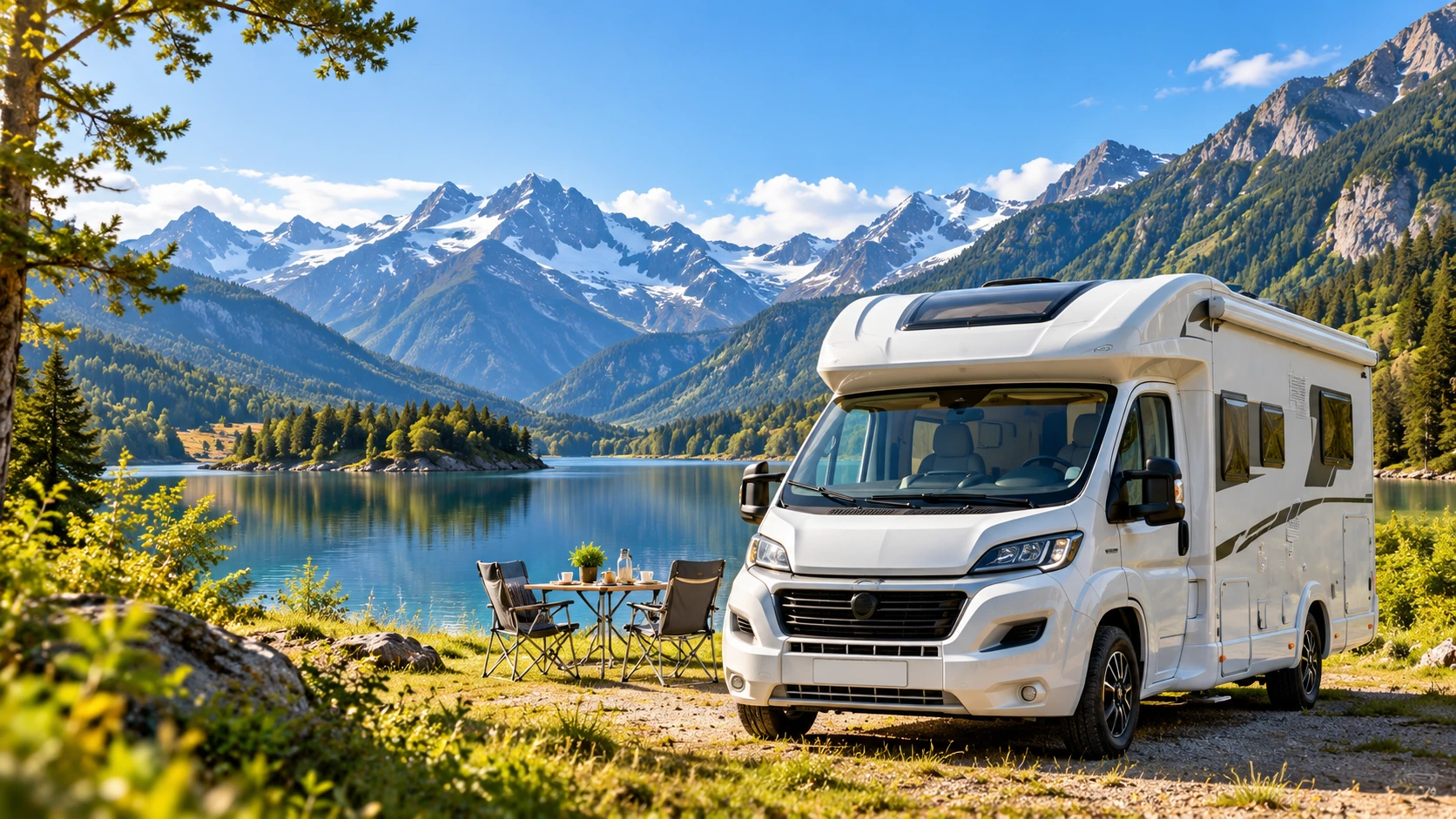
This USA-focused guide uses American RV terminology and helps you ask better questions before buying, storing or travelling.
Decide which RV fits your driving and camping plans
Before browsing used RV advertisements, decide whether you want a self-propelled motorhome, camper van, travel trailer or fifth wheel. Each type changes how you travel, park and store the vehicle. A compact van may suit frequent short trips; a towable trailer may suit longer stays where you leave the trailer parked and use your tow vehicle for errands.
Compare sleeping capacity with the number of legal, belted travel seats. The bed count is not proof that everyone can ride safely. Check the manufacturer's weight labels, the vehicle's gross ratings and actual payload instead of relying on marketing descriptions.
Confirm identity, ownership and title information
Ask to see the title and confirm that the seller is entitled to transfer the RV. Compare the VIN or relevant trailer identification number with the documentation and visible vehicle identification labels. If there is a lien, ask how it will be cleared and documented before ownership changes.
Title and registration requirements depend on the state and RV type. Check the relevant state motor-vehicle agency for the paperwork and fee requirements. An online listing or a reassuring message is not a substitute for matching original records.
Inspect for water intrusion and concealed damage
Water damage can be expensive to repair and may be hard to spot at a glance. Look around windows, roof seams, vents, doors, cabinets, corners and floor edges for staining, swelling, softness or unusual odours. Examine any repair notes and ask whether the roof and exterior joints have been maintained.
A qualified inspection can include moisture measurements and checks of the roof, walls and underbody. Ask about flood history where relevant, but do not assume that a vehicle is sound merely because the exterior has been cleaned. Take your own photographs and note any issues before discussing the price.
Check the mechanical and roadworthiness basics
For motorhomes, review the engine, transmission, cooling system, brakes, steering, suspension and service records. A safe test drive should cover braking, handling, unusual noises and instrument warnings. For towable RVs, pay particular attention to tires, axles, brakes, bearings, hitch hardware and the compatibility of the towing setup.
Verify tire age and condition, not only tread depth. Long periods parked can affect rubber and other components even when mileage is low. Review the age and performance of batteries and ask for receipts showing major maintenance work.
Test the living systems individually
Inspect the electrical equipment, converter or inverter where fitted, charging system, heating and cooling, water pumps, tanks, refrigerator, cooking equipment and installed safety detectors. Use the manufacturer’s operating instructions and have gas or electrical problems assessed by qualified professionals.
Do not assume everything works because the seller has powered on the lights. Ask for a demonstration of major systems under normal conditions and inspect for leaks, unusual noise, incomplete repairs or improvised wiring.
Make an independent inspection part of the deal
An independent RV inspection is particularly valuable for complicated vehicles or a long-distance purchase. Agree which components will be checked and whether the inspection includes road or systems testing. If a seller refuses a reasonable inspection, treat that as a reason to investigate further.
Request a written report and use it to distinguish maintenance items from issues that affect immediate safety or significant repair costs. A report helps you compare different RVs more objectively, rather than relying on photographs or a persuasive listing.
Estimate the full ownership budget
Include registration, tax, insurance, storage, fuel, tires, periodic servicing, unexpected repairs, camping fees and financing where relevant. A larger RV can cost substantially more to store and maintain than a smaller one, even if the purchase prices appear similar.
If you plan to keep the RV on private property, check local restrictions and available space. If you will use a commercial storage site, read the access, security and insurance terms. Our USA RV storage guide covers that decision separately.
Arrange a transparent payment and handover
Meet in an appropriate place, verify documents and use a payment process agreed with your bank or another trusted financial institution. Do not send a deposit to an unfamiliar account solely because the seller claims other buyers are waiting. Be cautious when a listing, title and payment recipient do not match.
At collection, retain the sale documents, keys, maintenance records and written information about any known faults. Confirm whether accessories, hitches, spare equipment or installed systems are included in the sale.
Next step: compare options without rushing
Prepare a shortlist of vehicles that meet your dimension, budget and layout needs, then compare inspection findings side by side. Make the final decision only after verifying ownership, condition and the true cost of bringing the RV into use.
Campspot.eu provides educational material and vehicle listings, but it does not guarantee RV stock in the USA. Check the location and terms of any advertised vehicle before arranging a viewing.
Frequently asked questions
What paperwork should I check when buying a used RV in the USA?
Check the vehicle or trailer identification number and ownership title, including any lien information, then confirm state-specific transfer requirements with the relevant agency.
Does low mileage guarantee a good used RV?
No. Storage conditions, age, water intrusion and neglected maintenance may matter as much as mileage.
Should I pay for an independent RV inspection?
It can be valuable, especially for complex or higher-value vehicles. Choose a qualified inspector and agree the scope before paying.
Can a travel trailer be towed by any SUV?
No. Verify vehicle and trailer weight ratings, hitch specifications and the complete loaded combination using the manufacturers' documentation.