

Motorhome storage in the UK: indoor or outdoor over winter?
Winter storage is not simply a question of leaving a motorhome somewhere with an empty space. The UK climate, the vehicle's height and the owner's need for occasional access all affect which site is practical. When.
Winter storage is not simply a question of leaving a motorhome somewhere with an empty space. The UK climate, the vehicle's height and the owner's need for occasional access all affect which site is practical. When comparing motorhome storage, look beyond the monthly figure and examine the surface, ventilation, security arrangements and contract.
Indoor storage and open compounds
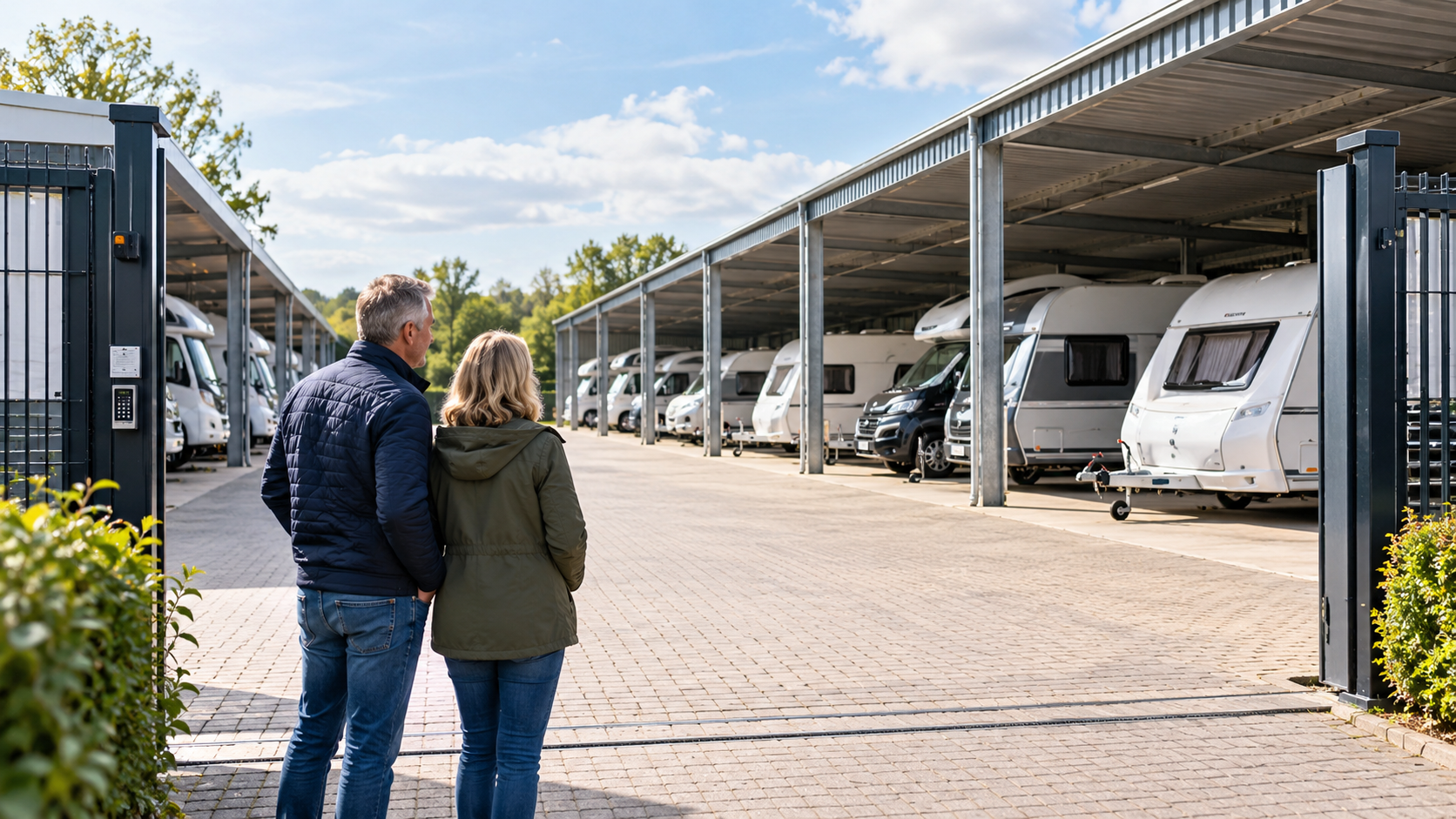
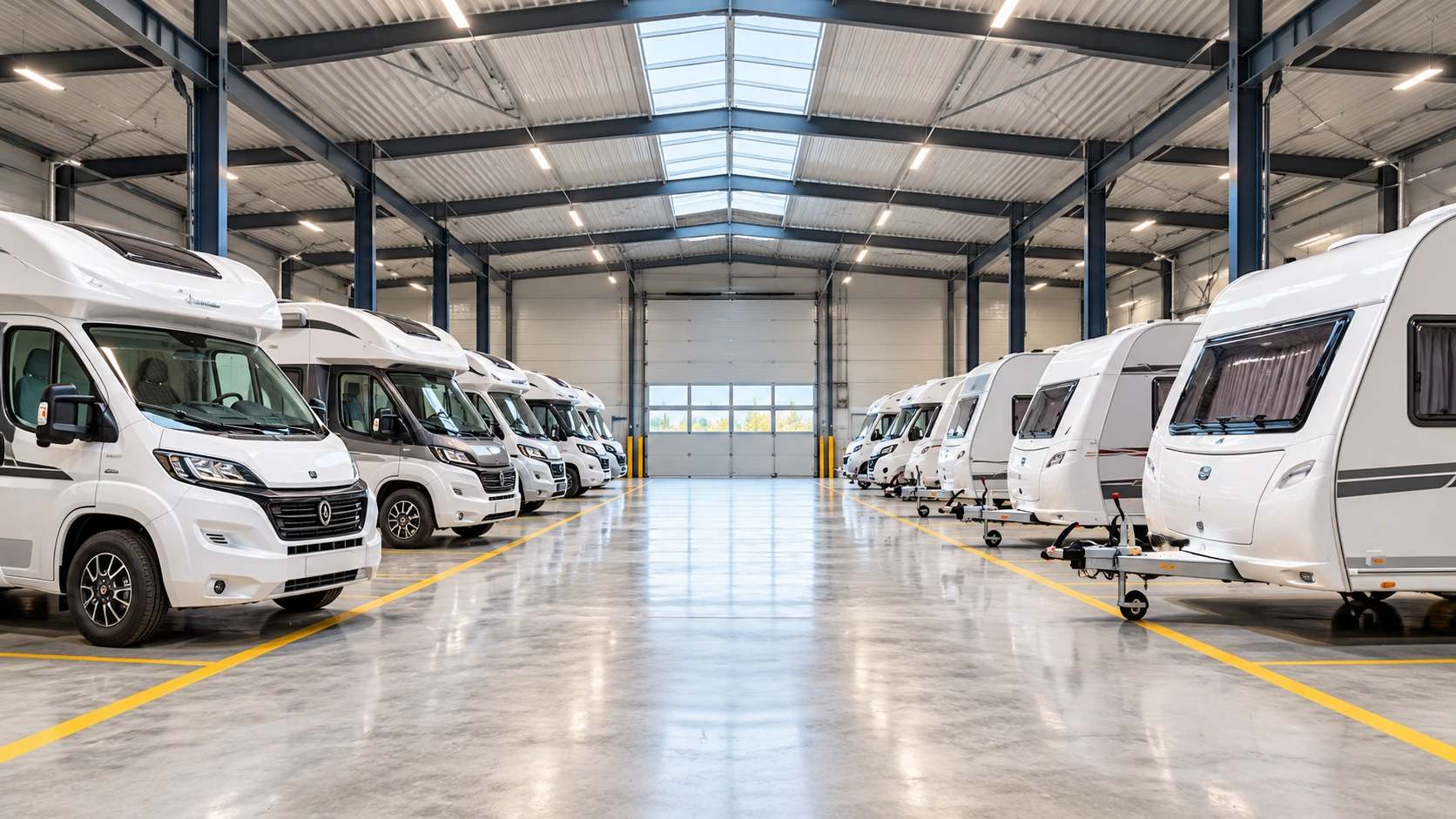
An enclosed building can reduce direct exposure to rain and wind, but airflow still matters. A covered compound may offer some shelter without full indoor protection. Outdoor storage may be easier to access but leaves the vehicle more exposed. Ask about the condition of the ground and any restrictions on moving the motorhome during the storage term.
Measure the real vehicle
Record the full height including roof equipment, the length with rear carriers and the width needed for safe manoeuvring. A site advertised as suitable for motorhomes may still have a low entrance or awkward turning area. Check whether the operator requires advance notice before you collect the vehicle.
Security is a combination of measures
Ask how access is controlled, who holds keys and whether the site is staffed or monitored. A gate alone does not establish how an incident would be handled. Clarify the operator's liability, any security procedures and the requirements of your own insurance. Keep the details in writing.
Prepare the vehicle
Follow the manufacturer’s instructions for water systems, batteries and winter temperatures. Remove perishable food and damp textiles, clean the habitation area and check external seals. Do not improvise with battery chargers or electrical leads where the operator has not authorised their use.
Compare complete storage terms
Look at opening hours, minimum stay, cancellation periods, access for maintenance and any additional charges. A low headline price may be less appealing if frequent access is costly. Campspot storage listings may provide further options; verify the location and availability of each site.
Weather exposure differs across the UK
A windswept coastal storage compound faces different conditions from a sheltered site inland. Ask how the operator deals with heavy rain, flooding risks, snow and blocked access. The ground should remain suitable for a large vehicle in typical seasonal conditions. If the motorhome has roof-mounted equipment, consider the exposure and the operator's height restrictions. A low price alone cannot tell you whether the site is suitable throughout winter.
The operator's procedures matter
Find out how vehicles are registered on arrival, who may move them and how incidents are reported. A well-managed site should be able to explain its access system and emergency contact arrangements. If the operator holds keys, clarify when they may be used and how that is documented. Where storage affects the conditions of your motorhome insurance, keep the relevant site details. A written agreement is far more dependable than an assumption based on a fence and a camera.
A practical checklist
- Actual dimensions fit the access
- The ground and shelter are suitable
- Security and insurance requirements are understood
- Collection and cancellation rules are clear
Explore related guides
You may also find it useful to read Motorhome winter storage: battery, water and tyres in the UK and Secure caravan storage near me: comparing UK sites. Both articles explore different practical questions.
Frequently asked questions
Is indoor storage always better?
It offers different weather protection, but ventilation, access and site management also matter.
Can I leave a charger connected?
Only where the installation and site rules permit safe charging.
Should I inform my insurer?
Check whether your policy has storage-location or security requirements.
Explore more information in the Campspot guides and check the current terms that apply to your particular situation.